
The short snorter tradition is said to have originated with Alaskan pilots during the 1920s. If you didn’t have a short snorter, you were obligated to pay a dollar to anyone who asked or by them a drink, i.e., a “short snort”.
The Ft. Leavenworth Lamp1 reported:
During World War II, airmen collected them, signed by crewmembers, and it wasn’t long before everyone in the armed services wanted their own keepsakes, too. Often, foreign currency was used instead of dollar bills. Bills would be taped to make one long bill that could be rolled up and carried in a pocket. John Steinbeck even wrote a brief article titled the “Short Snorter War Menace.”2. Steinbeck notes that politicians and celebrities signed them and even carried their own.
George Patton had a short snorter signed by, among others, George Marshall, “Hap” Arnold, Omar Bradley, and Louis Mountbatten. Patton’s signature is preserved on the short snorters of others. Other signatures found on various bills include Dwight Eisenhower, Franklin Roosevelt, Chester Nimitz, Bob Hope, Greg “Pappy” Boyington, John Wayne and Winston Churchill. Eleanor Roosevelt carried her short snorter with her during World War II and was pictured signing many bills for Soldiers. Marlene Dietrich is said to have had her own as well. In 1944, Coca-Cola ran an ad in a journal depicting a soldier showing off his autographed bill to others. An old 78 rpm jazz record titled “Short Snorter” has even been unearthed. It seemed everyone in uniform had a souvenir of this type, and servicemen would sit around clubs comparing them, and often the person with the least number of signatures would buy the drinks.
The Short Snorter Project has posted several short snorters of note: http://www.shortsnorter.org/Harry_Hopkins_Short_Snorter.html and http://www.shortsnorter.org/Hoyt_Vandenberg.html. I encourage you to visit these links.
There appear to have been any number of rules. The editor of Yank The Army Weekly felt compelled to set the record straight:3
Short Snorter “rules” are as erratic as a machine gun, and the club has deteriorated so much that practically anybody who can produce a dollar becomes a member. However, her are the basic, accepted rules you should keep if you want to be known as a respectable Short Snorter: Cross an ocean by plane; this doesn’t mean simply flying a few hundred miles over water on patrol. When you complete the trip, get inducted by at least three reputable Short Snorters and give each of them $1. Then write your name and the date on another dollar bill, which you will keep, and get each Short Snorter present to write his name on the same bill. Also, as a matter of form, you must sign their bills. You keep your bill with you everywhere you go, for it is your membership card and any short snorter anywhere in the world can ask you to produce it within 2 min. or forfeit $1. You, of course, now have the same privilege, and can challenge other Short Snorters. If the challenged member is able to produce his bill, he and the Challenger merely exchange signatures; it is not true that a challenged Short Snorter who can produce his bill gets a dollar from the Challenger for calling his bluff.
Some had lengthy short snorters that stretched several feet in length. Wayne had only a modest one, which consisted of four bills.
Some of the names on Wayne’s short snorter are legible to me and are those of men mentioned in his journal. Others are unknown, and yet others are illegible.
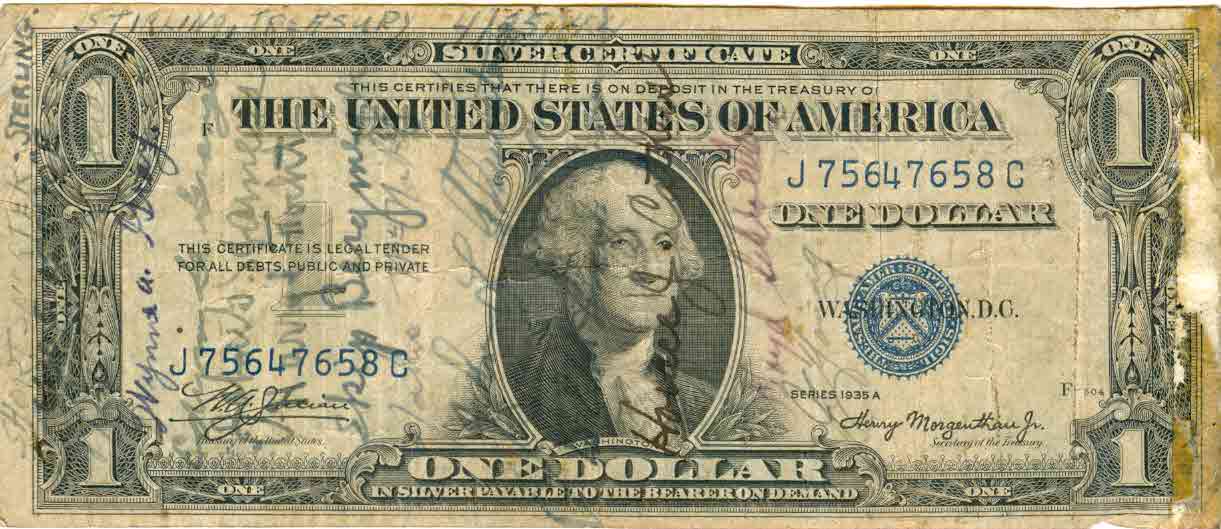
Among those that signed, I have been able to identify the signatures of Wynne A. Gray, Skip Bergmeyer and Horace J. Cathers.
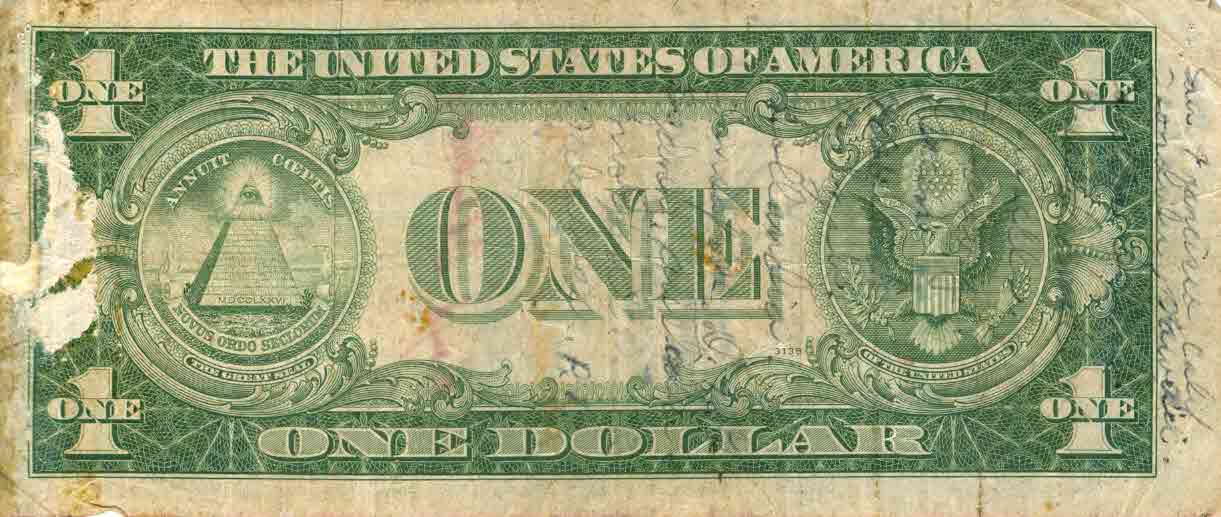
There is a list of places that Wayne has been.
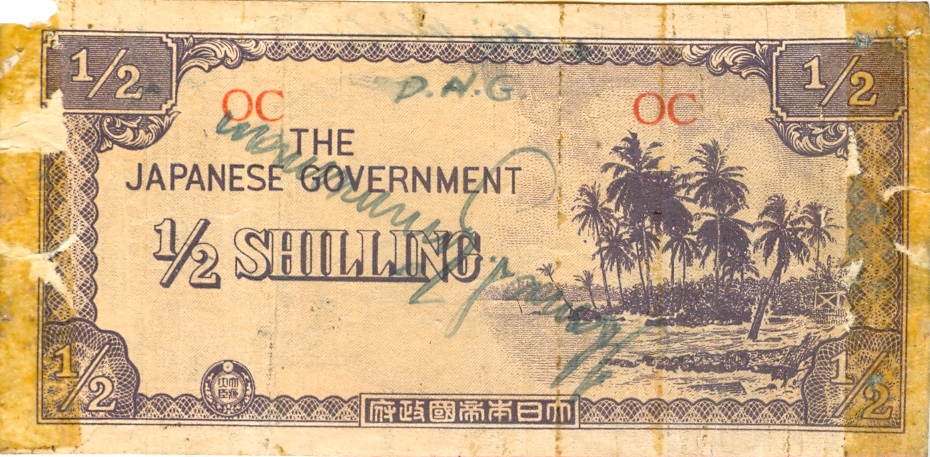
Thomas Zimmerman
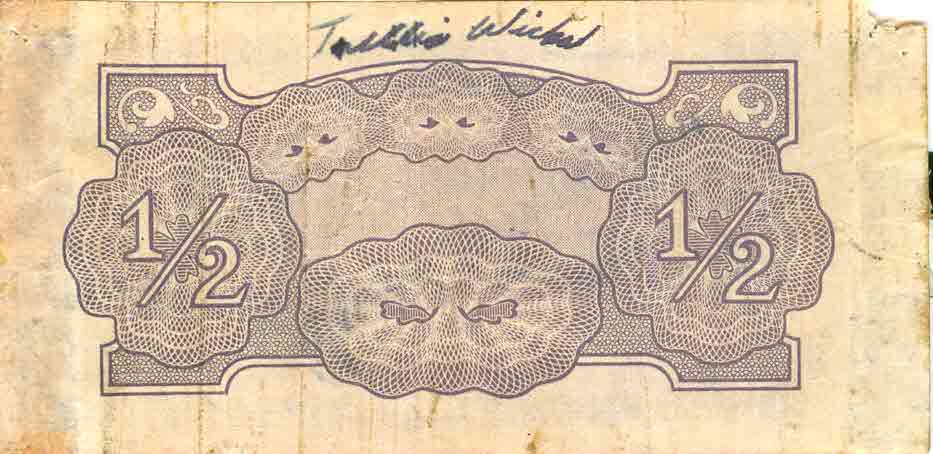
Trellis Wicks

Reggie Mersler(?)
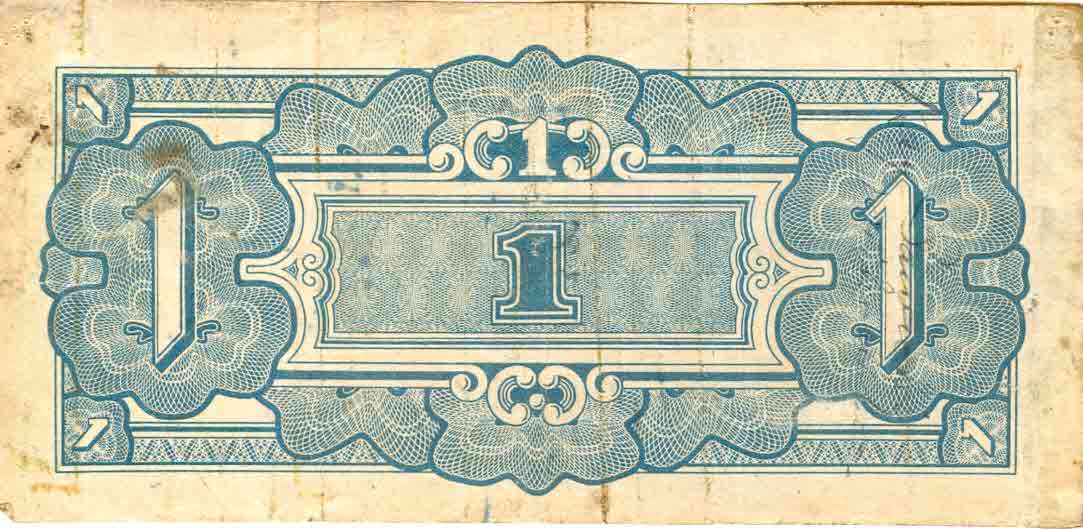
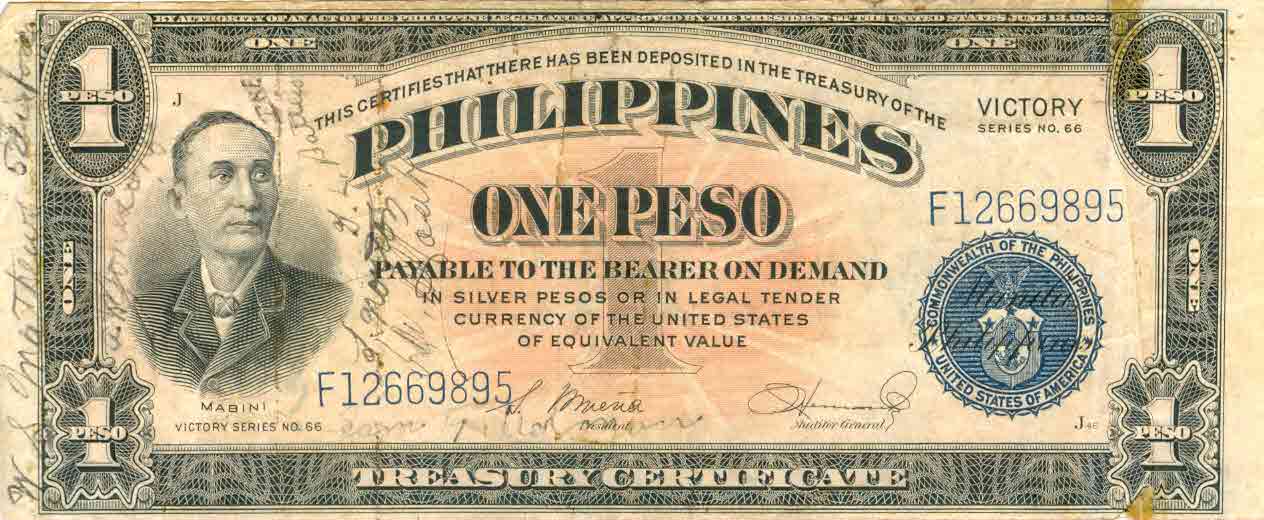
W. S. Mathews, 5th Air Force.
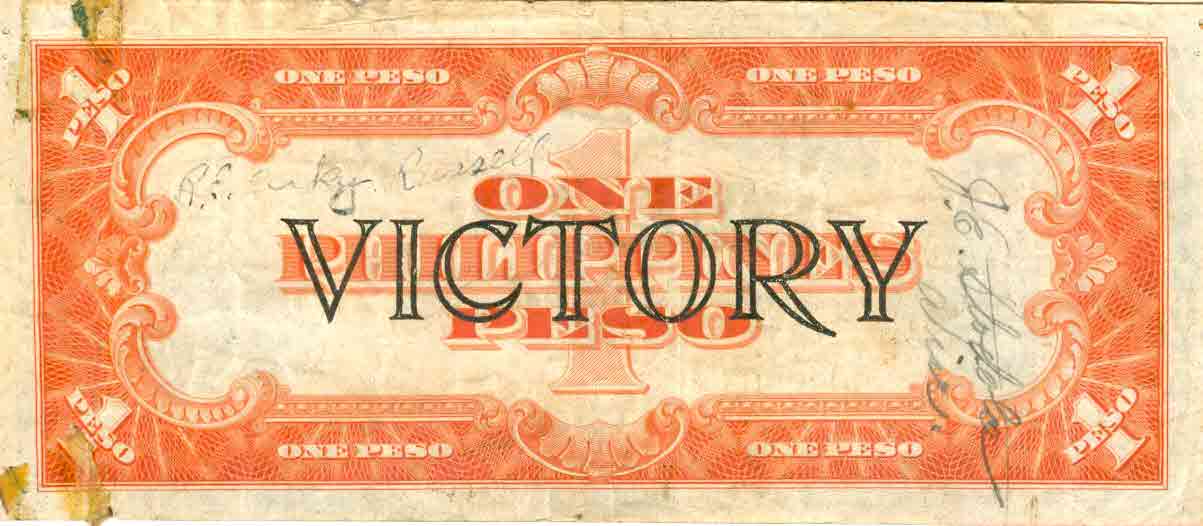
R. E. “Arky” Russell.
If you are able to identify any of the other signatures, please enter a comment for this posting.
Notes & Commentary
1 Heidi Crabtree. “Short snorter tradition similar to challenge coins.” FtLeavenworthLamp.com. (http://www.ftleavenworthlamp.com/article/20101124/News/311249866 : accessed 28 July 2014)
2 John Steinbeck. Once There Was a War. New York: Penguin Books, 1977. pp 113-115.
3 Editor. Yank The Army Weekly, British edition, December 19, 1943, viol. 2, no. 27. (http://www.306bg.org/yank/yank19dec43.pdf : accessed 08 August 2014). p 19.


